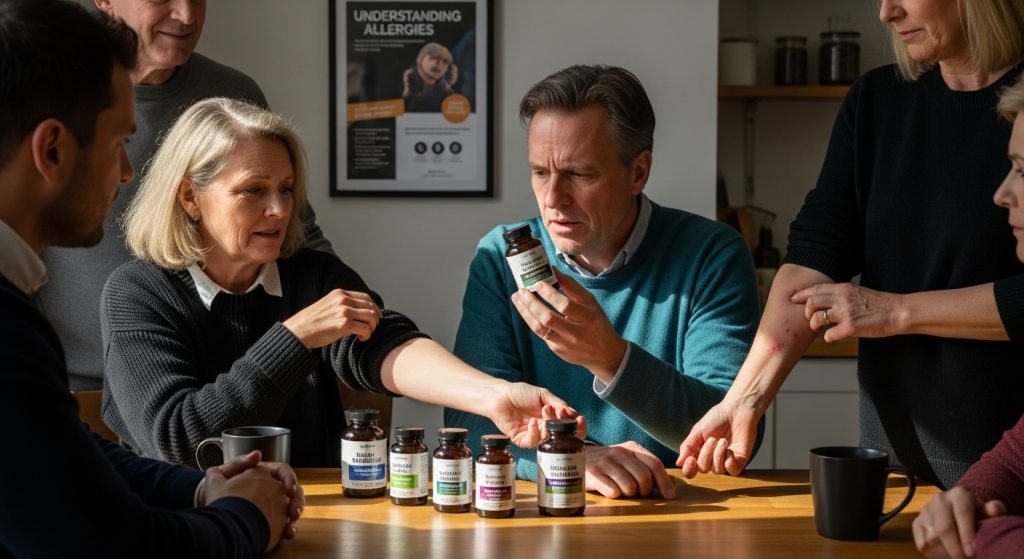
Short answer: Yes, you can have an allergic reaction to supplements, including herbal ones. Mild reactions usually show up as itching, hives, a rash or stomach upset, while a severe reaction (anaphylaxis) can cause throat swelling, wheezing and dizziness within minutes and needs 911 and epinephrine right away. Herbs in the daisy family, such as echinacea and chamomile, are well known triggers, and federal health sources also list severe allergic reactions as an uncommon side effect of Asian ginseng. If you react to any supplement, stop taking it and talk to a clinician before trying it again.
Key Takeaways
- “Natural” does not mean allergy free. Plant extracts contain proteins and other compounds your immune system can react to, just like foods or pollen.[1]
- People allergic to ragweed, chrysanthemums, marigolds or daisies are more likely to react to chamomile, and echinacea belongs to the same plant family.[2][3]
- Anaphylaxis symptoms often start within seconds or minutes. Call 911 and use an epinephrine injector if one is available.[4]
- A reaction is not always to the herb itself: fillers, capsule materials, contaminants or undeclared ingredients can be the cause.[1]
- Stop the product, keep the bottle, tell your doctor and consider reporting the reaction to the FDA Safety Reporting Portal.[1][6]
What Is an Allergic Reaction to Supplements?
An allergic reaction happens when the immune system wrongly treats a harmless substance as a threat. After a first exposure the body can become sensitized, and a later exposure triggers the release of histamine and other chemicals that cause itching, swelling, hives and, in the worst case, a drop in blood pressure and airway narrowing. MedlinePlus describes this sensitization step for anaphylaxis: the immune system becomes sensitized to an allergen, and a later exposure sets off the reaction.[4] That is why some people take an herb without trouble for weeks and then suddenly react.
Herbal supplements are concentrated plant material. A capsule, tincture or tea can deliver plant proteins, pollen residue and other compounds in larger amounts than you would meet in everyday food, so it is not surprising that some people react.
Allergy vs side effect vs intolerance
Not every bad reaction is an allergy. The difference matters because it changes how careful you need to be next time.
| Type of reaction | What it usually looks like | Is it an immune reaction? | What to do |
|---|---|---|---|
| True allergy (mild to moderate) | Hives, itching, flushing, lip or eyelid swelling, rash | Yes | Stop the product, call your doctor, avoid it until evaluated |
| Anaphylaxis | Throat or tongue swelling, wheezing, chest tightness, dizziness, fainting | Yes, whole body | Call 911, use epinephrine if available |
| Side effect | Insomnia, headache, nausea, stomach pain | No, a direct effect of the herb | Lower the dose or stop, ask a clinician |
| Intolerance | Bloating, gas, loose stools | No, usually digestive | Try with food or stop; mention it to your doctor |
| Drug interaction | A medicine works less well or too strongly | No | Tell your doctor and pharmacist about every supplement |
For example, NCCIH lists stomach pain and nausea as the most common side effects of echinacea and insomnia as the most common side effect of Asian ginseng.[3][5] Those are side effects, not allergies, even though both herbs can also cause allergic reactions in some people.
Herbal Supplement Allergy Symptoms
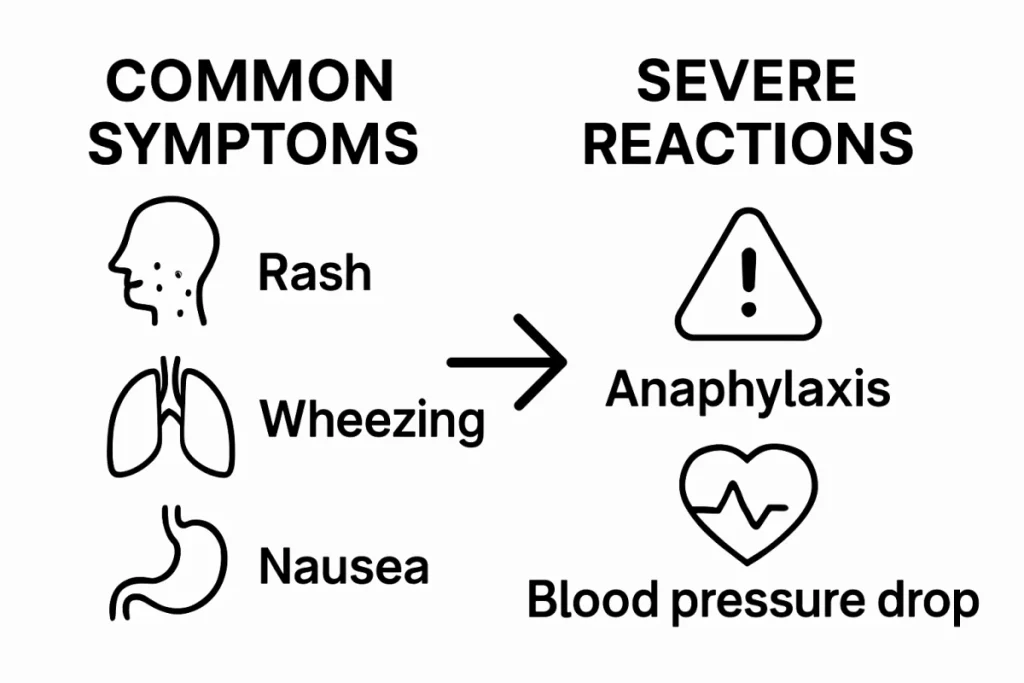
Mild and moderate symptoms
- Hives (raised, itchy welts) or a red, itchy rash
- Flushing or general itching
- Swelling of the lips, eyelids or face
- Runny nose, sneezing or watery eyes
- Nausea, vomiting, cramps or diarrhea shortly after a dose
In a children’s clinical trial of echinacea, some children developed rashes that may have been caused by an allergic reaction, and NCCIH notes concern that such reactions could be severe in some children.[3]
Severe symptoms: signs of anaphylaxis
MedlinePlus lists these possible anaphylaxis symptoms:[4]
- Difficulty breathing, coughing or wheezing
- Chest tightness or discomfort
- Swelling of the face, eyes or tongue
- Difficulty swallowing or slurred speech
- Dizziness, lightheadedness, palpitations or anxiety
- Hives, itching or redness together with any of the above
- Unconsciousness
Symptoms often develop within seconds or minutes.[4] A mild rash after one dose can be followed by a stronger reaction the next time, so do not “test” the product again on your own.

Which Herbs Commonly Cause Allergic Reactions?
Daisy family herbs (Asteraceae)
This is the best documented group. NCCIH states that people are more likely to have allergic reactions to chamomile if they are allergic to related plants such as ragweed, chrysanthemums, marigolds or daisies, and that chamomile side effects can include severe hypersensitivity reactions and anaphylaxis in some people.[2] Echinacea is closely related to sunflowers, daisies and ragweed, and NCCIH notes that some people have allergic reactions to it, which may be severe.[3] If you have hay fever from ragweed, read labels for these herbs carefully, including in teas and “immune” blends.
Asian ginseng (Panax ginseng)
NCCIH lists severe rash, liver damage and severe allergic reactions among the uncommon side effects reported with Asian ginseng. It also notes that short term oral use (up to 6 months) in recommended amounts appears to be safe for most people.[5] Uncommon does not mean impossible, so anyone with a history of strong drug or plant allergies should talk to a clinician first. You can read more about this herb in our guide to Panax ginseng benefits for men.
Other possible triggers inside the bottle
The herb on the front label is not the only suspect. NCCIH warns that what is on the label may not be what is in the product, and that some supplements have been found to contain prescription drugs or other ingredients not listed on the label.[1] Reactions can also come from:
- Inactive ingredients such as fillers, flow agents, dyes or flavorings
- Capsule shells (gelatin or plant cellulose)
- Cross contact with common allergens in the factory
- Contaminants such as mold or pollen in poorly processed raw material
- Blends with many herbs, which make it hard to know which one caused the problem
This is why a clear, fully disclosed label matters. Our guide on how to read supplement labels shows what to look for, and third party tested supplements explains how independent testing helps confirm that a product contains what it claims.
Why Herbal Supplements Carry Extra Allergy Risk
Three facts make supplements different from medicines when it comes to allergies:
- No pre-market safety review. NCCIH explains that the FDA is not authorized to review dietary supplements for safety and effectiveness before they are marketed, and can act against adulterated or misbranded products only after they are on the market.[1]
- “Natural” is a marketing word. NCCIH puts it plainly: natural does not always mean safe.[1] Pollen, peanuts and bee venom are natural too.
- Interactions can mimic or worsen reactions. Supplements may interact with medications. NCCIH notes that chamomile may interact with warfarin and some drugs processed by the liver, and that Asian ginseng might interact with certain medications and may lower blood sugar.[2][5]
What to Do If You Have a Reaction
Emergency steps
If you see any sign of anaphylaxis, MedlinePlus advises calling 911 or your local emergency number immediately, using an epinephrine injector or intranasal epinephrine right away if one is available, and not giving anything by mouth if the person has trouble breathing. To help prevent shock, the person can lie flat with feet raised about 12 inches, unless there is a head, neck, back or leg injury, it causes discomfort, or they are vomiting.[4]
For milder reactions
- Stop the supplement. NCCIH advises that if you have side effects, you should stop taking the supplement and contact your health care provider.[1]
- Keep the bottle and lot number. Your doctor or allergist will want the full ingredient list.
- Write down the timeline. When you took it, how much, what else you ate or took, and when symptoms began.
- See a clinician or allergist. They can help work out whether it was an allergy, a side effect or something else, and whether it is safe to try related herbs.
- Report it. The FDA asks consumers to stop using the product and file a report through its Safety Reporting Portal. You can report as a guest, and complete reports are the most helpful.[6]
How to Lower Your Risk Before You Start a Supplement
- Know your plant allergies. If you react to ragweed or daisies, be cautious with chamomile, echinacea and other daisy family herbs.[2][3]
- Choose single ingredient or fully disclosed formulas. Avoid proprietary blends that hide amounts, so you and your doctor know exactly what you are taking.
- Introduce one new product at a time. Wait a week or two before adding another, so you can pinpoint a culprit.
- Tell every health care provider about every supplement. NCCIH recommends this so they can check for interactions.[1]
- Use extra caution with children, pregnancy and breastfeeding. NCCIH advises talking with a child’s provider before giving echinacea, and notes that Asian ginseng may be unsafe when taken orally during pregnancy.[3][5]
A Note on Ultra Bann
Ultra Bann is a natural male vitality supplement by DL Bioproducts, taken as one capsule every 2 days. It lists seven botanicals with their exact amounts and no proprietary blend: Thai Butea superba 345 mg, Panax ginseng 110 mg, Cynomorium songaricum 85 mg, black ginger (Kaempferia parviflora) 85 mg, tongkat ali 85 mg, epimedium (horny goat weed) 45 mg and reishi (Ganoderma lucidum) 45 mg, for 800 mg total. It does not contain chamomile, echinacea or other daisy family herbs. It does contain Panax ginseng, for which NCCIH reports severe allergic reactions as an uncommon side effect, so anyone with a history of plant or supplement allergies should review the full Ultra Bann ingredient label with a clinician before starting. If you decide it fits your routine, you can find it in the Ultra Bann shop; first orders include free US shipping and a 60-day money-back guarantee. Like any supplement, stop taking it and seek care if you notice signs of a reaction.
Frequently Asked Questions
Can you be allergic to supplements?
Yes. Herbal and other dietary supplements can cause allergic reactions ranging from hives and itching to anaphylaxis. NCCIH lists allergic reactions for herbs such as echinacea, chamomile and Asian ginseng.[2][3][5]
How long after taking a supplement can an allergic reaction start?
Severe reactions often begin within seconds or minutes of exposure.[4] Milder skin reactions can appear later, sometimes hours after a dose, which is why keeping a simple log of what you took and when is useful.
What does an allergic reaction to supplements look like on the skin?
Most often it is hives (raised, itchy welts), a red itchy rash, flushing or swelling of the lips and eyelids. Swelling of the tongue or throat, or trouble breathing, is an emergency.
If I am allergic to ragweed, can I take herbal supplements?
You can take many supplements, but be careful with daisy family herbs. NCCIH says people allergic to ragweed, chrysanthemums, marigolds or daisies are more likely to react to chamomile, and echinacea is closely related to ragweed.[2][3] Ask an allergist which herbs to avoid.
Should I report a reaction to a supplement?
Yes. Stop the product, talk with your health care provider and file a report through the FDA Safety Reporting Portal. Reports help the FDA spot unsafe products, since supplements are not reviewed for safety before they are sold.[1][6]
References
- National Center for Complementary and Integrative Health (NCCIH). Using Dietary Supplements Wisely. nccih.nih.gov
- NCCIH. Chamomile. nccih.nih.gov
- NCCIH. Echinacea. nccih.nih.gov
- MedlinePlus Medical Encyclopedia. Anaphylaxis. U.S. National Library of Medicine. medlineplus.gov
- NCCIH. Asian Ginseng. nccih.nih.gov
- U.S. Food and Drug Administration. How to Report a Problem with Dietary Supplements. fda.gov
These statements have not been evaluated by the Food and Drug Administration. This product is not intended to diagnose, treat, cure or prevent any disease. This article is for information only and is not medical advice.
Ultra Bann natural male vitality support
1 capsule every 2 days. Free US shipping and a 60-day money-back guarantee on your first order.
See Ultra BannThese statements have not been evaluated by the Food and Drug Administration. This product is not intended to diagnose, treat, cure, or prevent any disease.