
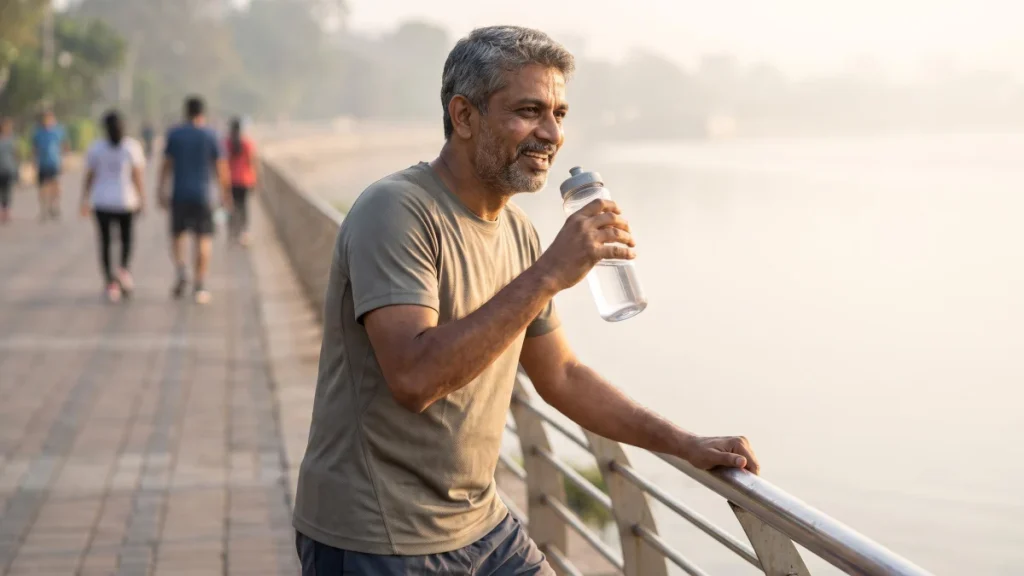
Short answer: The most common dehydration symptoms in adult men are strong thirst, peeing less often, dark yellow urine, dry mouth, fatigue, headache and dizziness. Confusion, fainting, a racing heart, no urine for many hours or a high fever with hot, dry skin are warning signs that need medical care right away. Most mild cases resolve by drinking water, and an electrolyte drink helps when you have lost a lot of sweat or fluid from vomiting or diarrhea.
Key Takeaways
- Early dehydration symptoms are easy to miss: thirst, dark urine, less urine, dry mouth, headache, tiredness and lightheadedness.
- Confusion, fainting, seizures, a rapid pulse or a fever of 103°F (39.4°C) or higher are emergency signs, according to Cleveland Clinic.[2]
- Coffee and tea still count toward your daily fluids; the water in them outweighs their mild diuretic effect.[3][4]
- Pale yellow or straw-colored urine is a practical everyday target. Dark urine means drink more.
- Heat, hard physical work, illness, diuretic medicines and age all raise the risk. Older men often feel less thirst even when they are low on fluid.
- For daily intake targets and routines, see our guide on how much water a man should drink a day.

What Dehydration Is and Why It Happens
MedlinePlus defines dehydration as “a condition caused by the loss of too much fluid from the body.” It happens when you lose more water than you take in, so your body no longer has enough to work normally.[1] Water is not the only thing you lose. Sweat, vomiting and diarrhea also drain electrolytes such as sodium and potassium, which your nerves and muscles depend on.
The common causes are simple and often stack together:[1][5]
- Not drinking enough on busy days, during travel or when you are sick and do not feel like eating or drinking.
- Heavy sweating from heat, humidity, outdoor work or hard exercise.
- Diarrhea and vomiting, which remove fluid and electrolytes quickly.
- Fever. Mayo Clinic notes that the higher the fever, the more severe dehydration might be.[5]
- Medicines that increase urination, such as diuretics (“water pills”) and some blood pressure medicines.
- Undiagnosed or uncontrolled diabetes, which can increase urination.
Dehydration Symptoms in Men: Mild, Moderate and Severe
Symptoms run along a spectrum. Men tend to notice the middle of it (headache, low energy, a sluggish workout) and blame something else. The table below groups the signs reported by Mayo Clinic, Cleveland Clinic and MedlinePlus into practical levels.[1][2][5]
| Level | Typical signs | What to do |
|---|---|---|
| Mild | Thirst, dry mouth, darker urine, peeing less often, mild headache, tiredness | Drink water steadily. Cleveland Clinic says many people feel better within 5 to 10 minutes of drinking. |
| Moderate | Very dark urine or very little urine, dizziness when standing, muscle cramps, dry skin, marked fatigue | Rehydrate with water plus an electrolyte or oral rehydration drink. Moderate cases may need IV fluids at urgent care or an emergency room. |
| Severe | Confusion, slurred speech, fainting, seizures, rapid pulse or breathing, no urine, sunken eyes, skin that stays “tented” when pinched | Call 911 or go to the emergency room. Severe dehydration needs medical treatment right away. |
The urine check
Urine color is the easiest home test. Mayo Clinic describes urine that is “colorless or light yellow” as a sign you are probably drinking enough, while dark urine suggests you are not.[3] Cleveland Clinic describes the goal as pale, clear or straw-colored.[2] Keep in mind that some vitamins and foods change urine color, so look at the trend over a day, not one trip to the bathroom.
The pinch test and other physical clues
Mayo Clinic lists skin that stays pinched or tented instead of snapping back, and sunken eyes or cheeks, as signs of dehydration.[5] These are later signs. If you notice them, you are well past the “grab a glass of water” stage.
Hydration Myths vs Facts
Much of what men hear about hydration is either outdated or oversimplified. Here is how the common claims hold up against current guidance.
| Myth | Fact |
|---|---|
| Every man needs exactly 8 glasses a day. | Needs vary with body size, activity, climate and health. Mayo Clinic gives a range of about 11.5 to 15.5 cups (2.7 to 3.7 liters) of total fluid a day for healthy adults, from all drinks and food.[3] |
| Coffee dehydrates you. | Harvard Health says caffeinated drinks increase urination, but their water still makes a net positive contribution to your daily fluids. Mayo Clinic counts tea, coffee and milk toward intake.[3][4] |
| Only plain water counts. | Food supplies roughly 20% of daily water. Watermelon, strawberries, cantaloupe, cabbage and squash are mostly water.[3] |
| Clear urine all day is the goal. | Pale yellow is enough. Drinking far beyond your needs brings no extra benefit. |
| You cannot drink too much water. | It is rare in healthy adults, but very high intake can lower blood sodium (hyponatremia), which Mayo Clinic calls potentially life-threatening. It is mostly seen in endurance athletes.[3] |
| Sports drinks are better than water for everyone. | Water is the first choice. Electrolyte drinks earn their place with heavy sweating, long sessions, or fluid loss from vomiting or diarrhea.[1][2] |
| If you are not thirsty, you are fine. | Thirst weakens with age, and some medicines increase fluid loss. Older men can be low on fluid without feeling thirsty.[4][5] |
So, does coffee dehydrate you?
For a regular coffee drinker, a normal amount of coffee is not a net dehydrator. The real caveats are different: too much caffeine can cause jitters and disturb sleep, as Harvard Health notes, and Cleveland Clinic still prefers water over caffeinated or alcoholic drinks when you are actively trying to rehydrate.[2][4] In short, your morning cup counts, but when you feel dehydrated, reach for water first. If you want the full picture on caffeine limits, read how much caffeine is too much.
And alcohol?
Alcohol is a poorer choice for hydration, and Harvard Health suggests men keep to one to two drinks a day at most.[4] A night of drinking followed by a hot day outside is a classic setup for dehydration. Our guide to how much alcohol is too much covers the details.
Heat, Hard Work and Exercise: When Dehydration Turns Dangerous
Hot, humid weather increases sweat and fluid loss, and Mayo Clinic lists heat injury, from heat cramps to heatstroke, as a key complication of dehydration.[5] Men who work outdoors, train hard in summer or do physical jobs in hot buildings should know the difference between the three main heat illnesses described by the CDC’s National Institute for Occupational Safety and Health (NIOSH).[6]
Heat cramps
Muscle pain or spasms in the legs, arms or abdomen. NIOSH advises drinking water and having a carbohydrate and electrolyte drink or snack every 15 to 20 minutes, avoiding salt tablets, and getting medical help if cramps do not ease within 1 hour, or if the person has heart problems or follows a low-sodium diet.[6]
Heat exhaustion
Headache, nausea, dizziness, weakness, irritability, thirst, heavy sweating, a raised body temperature and less urine. Get out of the heat, loosen clothing, cool the head, face and neck with cold water, and take frequent sips of cool water. NIOSH recommends evaluation at a clinic or emergency room, and calling 911 if care is not available.[6]
Heat stroke (a medical emergency)
Confusion, slurred speech, seizures, loss of consciousness, hot dry skin or heavy sweating, and a very high body temperature. NIOSH notes body temperature can reach 106°F or higher within 10 to 15 minutes. Call 911, move the person to shade, and cool them fast with cold water, ice or wet cloths on the head, neck, armpits and groin while you wait.[6]
One more warning for men who push hard in the heat: NIOSH lists abnormally dark, tea or cola-colored urine with muscle pain or weakness as a sign of rhabdomyolysis, a muscle breakdown condition that needs immediate medical care.[6]
Practical fluid plan for active days
Cleveland Clinic suggests that active adults drink 16 to 20 ounces one to two hours before outdoor activity, 6 to 12 ounces every 10 to 15 minutes during it, and at least 16 to 24 ounces afterward.[2] For long or very sweaty sessions, add an electrolyte drink. Our sports nutrition guide for men covers what to eat around training.
Who Is at Higher Risk
- Older men. The body holds less water and thirst is weaker with age, so dehydration can build without warning.[2][5]
- Men on diuretics or certain blood pressure medicines, which increase urination.[5]
- Men with diabetes, heart disease or kidney problems. These conditions change how the body handles fluid. Some people with heart, kidney, liver or thyroid problems are told to limit fluids, so ask your doctor what amount is right for you.[1][4]
- Outdoor workers and athletes in hot or humid conditions.[1]
- Anyone with a stomach bug or fever, especially when fluids will not stay down.
When to See a Doctor or Get Urgent Care
Call your doctor if you have had diarrhea for 24 hours or more, cannot keep fluids down, have bloody or black stool, have a fever of 102°F or higher, or are unusually confused, irritable or sleepy, according to Mayo Clinic.[5]
Go to the emergency room or call 911 for any of these:[1][2][6]
- Fever of 103°F (39.4°C) or higher, especially with hot, red, dry skin or no sweating
- Confusion, slurred speech, hallucinations, fainting or a seizure
- A rapid heartbeat or rapid breathing
- Little or no urine
- Dark, cola-colored urine with muscle pain after heavy exertion
Mayo Clinic lists kidney problems, seizures and hypovolemic shock (a dangerous drop in blood pressure and oxygen) among the complications of untreated dehydration.[5] Do not try to “push through” severe symptoms.
How to Rehydrate the Right Way
- Start with water, sipped steadily rather than chugged.
- Add electrolytes (an oral rehydration solution or sports drink) after heavy sweating, vomiting or diarrhea. MedlinePlus explains that treatment means replacing both fluids and electrolytes.[1]
- Eat water-rich food such as fruit, vegetables and broth once you can.
- Check your urine over the next few hours. It should return to pale yellow.
- Seek care if you cannot keep fluids down or symptoms get worse.
Where Supplements Fit
No supplement replaces water, and dehydration is not something to manage with pills. If you take a daily supplement routine, simply swallow capsules with a full glass of water as part of your normal intake. Ultra Bann, for example, is a once every 2 days herbal capsule from DL Bioproducts with seven botanicals listed by amount on the full label. It is not a hydration product. You can see it in the Ultra Bann shop.
Frequently Asked Questions
What are the first signs of dehydration?
Thirst, a dry mouth, darker urine and peeing less often usually come first, followed by headache, tiredness and lightheadedness. Catching it at this stage means a few glasses of water are usually enough.
How long does it take to rehydrate?
For mild dehydration, Cleveland Clinic says many people feel better within 5 to 10 minutes of drinking fluids. Full recovery after heavy fluid loss takes longer, and moderate or severe cases may need IV fluids.
Does coffee count toward daily water intake?
Yes. Mayo Clinic counts coffee and tea toward your daily fluids, and Harvard Health says the water in caffeinated drinks outweighs the extra urination they cause. When you feel dehydrated, though, choose water first.
Can dehydration cause high heart rate or dizziness?
Yes. Dizziness is a common symptom, and a rapid pulse is listed by Cleveland Clinic and MedlinePlus among the signs that need prompt medical attention, especially with confusion or fainting.
How much water should a man drink a day?
Mayo Clinic gives a range of about 2.7 to 3.7 liters of total fluid a day for healthy adults, and Harvard Health puts the average for men at about 15.5 cups, from all drinks and food. Heat and exercise raise that number. Our hydration hacks guide turns it into a daily routine.
References
- MedlinePlus (U.S. National Library of Medicine). Dehydration.
- Cleveland Clinic. Dehydration: Symptoms, Causes and Treatment.
- Mayo Clinic. Water: How much should you drink every day?
- Harvard Health Publishing. How much water should you drink?
- Mayo Clinic. Dehydration: Symptoms and causes.
- CDC, National Institute for Occupational Safety and Health. Heat-Related Illnesses.
These statements have not been evaluated by the Food and Drug Administration. This product is not intended to diagnose, treat, cure or prevent any disease. This article is for information only and is not medical advice.
Ultra Bann natural male vitality support
1 capsule every 2 days. Free US shipping and a 60-day money-back guarantee on your first order.
See Ultra BannThese statements have not been evaluated by the Food and Drug Administration. This product is not intended to diagnose, treat, cure, or prevent any disease.