

Short answer: Maca root is a reasonable, low-risk option for men who want to support sexual desire, but the evidence is small and the effects are modest. In controlled trials, men taking 1,500 to 3,000 mg a day reported more sexual desire than placebo after about 8 weeks, without any change in testosterone. Evidence for sperm quality is mixed, and claims about energy and mood rest mostly on animal studies.
Key Takeaways
- Maca (Lepidium meyenii) is an Andean root vegetable related to the cabbage family, eaten as food in Peru for centuries and now sold as powder, capsules and tablets.
- The best human data in men concern libido: a 12-week trial in 57 healthy men found higher self-reported sexual desire than placebo from week 8 onward.
- Maca does not appear to work through hormones. Studies in healthy men found no change in testosterone, LH, FSH, prolactin or estradiol.
- A 2022 meta-analysis of five randomized trials called its effect on semen quality “unclear.”
- Typical studied doses are 1,500 to 3,000 mg per day, taken daily for at least 8 to 12 weeks.
- Side effects appear uncommon and mild, but safety data are limited. Talk to a doctor if you take blood pressure medication, have a hormone-sensitive cancer, or are getting testosterone blood work.
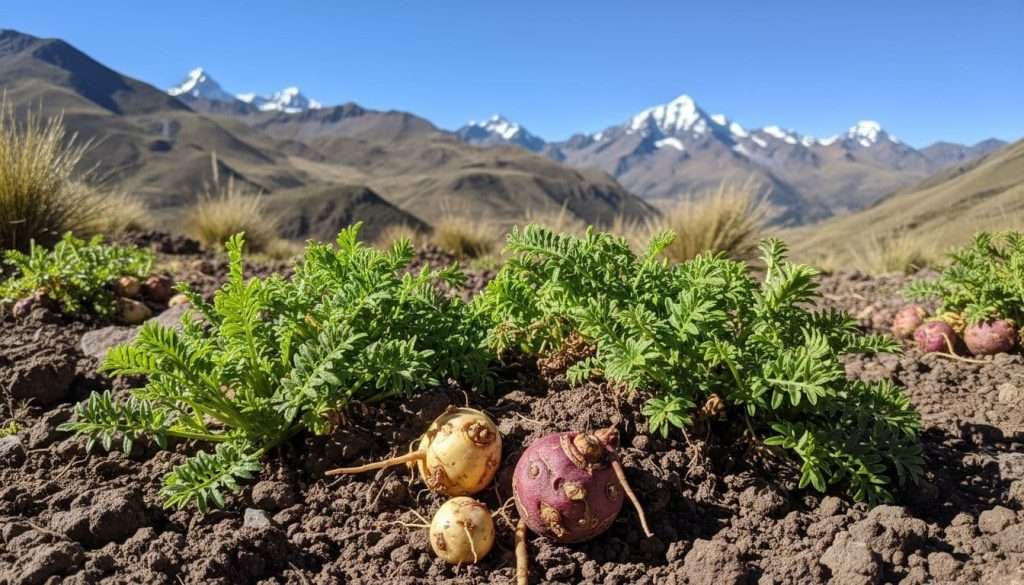
What Is Maca Root?
Maca is a root plant that grows at high altitude in the Andes. Memorial Sloan Kettering Cancer Center describes it as a plant related to the cabbage family that is used as both food and traditional medicine in Peru.[3] The root comes in several colors, mainly yellow, red and black, and is usually dried and ground into powder.[5] Two species names show up on labels: Lepidium meyenii and Lepidium peruvianum.
Men usually look at maca for four reasons: sex drive, fertility, energy and mood. Those goals do not all have the same level of support, so it helps to separate them instead of treating maca as a general “male booster.”
Is Maca Root Good for Men? What the Human Evidence Shows
The honest answer is “probably a little, for some things.” A 2010 systematic review in BMC Complementary and Alternative Medicine searched 17 databases and found only four randomized placebo-controlled trials of maca for sexual function, with 131 participants in total.[1] The authors concluded there was “limited evidence” that maca improves sexual function and noted that trial sizes were small (8 to 57 participants) with weak reporting of randomization and blinding.[1]
Sexual desire (libido)
The most cited men’s study is a 12-week Peruvian trial in 57 healthy men aged 21 to 56. Participants took 1,500 mg or 3,000 mg of gelatinized maca a day, or a placebo.[1] Self-perceived sexual desire was not different from placebo at week 4, but it was higher in the maca group at weeks 8 and 12.[1] MSK notes that this rise in desire did not track with serum testosterone, which is an important detail: maca is not a testosterone product.[3]
A smaller crossover study in 8 trained male cyclists who took 2,000 mg a day for only 2 weeks found no significant difference against placebo on a sexual desire questionnaire.[1] That result fits the pattern from the larger trial: if maca helps, it takes weeks, not days.
Erectile function
One Italian trial enrolled 50 men with mild erectile dysfunction (average age 36) and gave them 2,400 mg of dried maca root a day or placebo for 12 weeks.[1] The maca group scored about 1.1 points higher on the IIEF-5 erection questionnaire than the placebo group.[1] Both groups improved, and the difference was statistically significant but small. MSK calls these findings preliminary.[3] Erection problems can have medical causes that deserve a proper checkup, so this is a topic for a clinician first, not a supplement shelf.
Sperm and fertility
Results here are genuinely mixed. A 2022 meta-analysis in Frontiers in Pharmacology pooled five randomized trials in healthy and infertile men and found no significant overall benefit on sperm concentration.[2] Individual trials pointed in different directions: one trial in infertile men found higher sperm concentration with maca, while a small trial in healthy men found lower concentration but better sperm shape and slightly higher semen volume.[2] The authors described maca’s effect on semen quality as “unclear” and said the trials were too few and too small for firm conclusions.[2]
Energy, stamina and mood
This is where marketing runs furthest ahead of the science. MSK lists no human trials in men for energy; its energy evidence comes from animal endurance studies, and its mood evidence comes from mice under chronic stress.[3] Examine.com reports that maca may help mood-related menopause symptoms in women, but more research is needed.[5] The NIH LiverTox database states plainly that claimed benefits for sexual function, fertility, mood, memory and energy have not been confirmed in rigorous prospective human trials.[4]
| Study (from reviews) | Who | Daily dose and length | Main finding |
|---|---|---|---|
| Gonzales 2002 (Peru) | 57 healthy men, 21 to 56 years | 1,500 or 3,000 mg gelatinized maca, 12 weeks | More self-reported desire than placebo at 8 and 12 weeks; no testosterone change |
| Zenico 2009 (Italy) | 50 men with mild erectile dysfunction | 2,400 mg dried root, 12 weeks | IIEF-5 score about 1.1 points higher than placebo |
| Stone 2009 (UK) | 8 trained male cyclists | 2,000 mg gelatinized maca, 2 weeks | No significant difference in sexual desire vs placebo |
| Lee 2022 meta-analysis | 5 trials, healthy and infertile men | Varied | No significant pooled effect on sperm concentration; overall “unclear” |

How Maca Works (and What It Does Not Do)
Nobody knows exactly how maca works. Examine.com notes that its effects do not seem to come from changes in testosterone, estrogen or luteinizing hormone.[5] MSK cites a 2003 study in healthy men that found no effect on LH, FSH, prolactin, testosterone or estradiol.[3] In laboratory studies, some maca extracts showed estrogen-like activity, which is the reason for caution in hormone-sensitive conditions.[3]
So if your real question is about testosterone, maca is the wrong tool. Start with the basics: our guides to the signs of low testosterone and foods that support healthy testosterone cover what actually matters, and a blood test with your doctor is the only way to know your level.
How Much Maca Root Per Day and How to Take It
Examine.com gives a standard dose of 1,500 to 3,000 mg a day, taken daily with food.[5] LiverTox lists a broader typical range of roughly 500 to 3,000 mg, depending on the preparation.[4] The men’s trials above used 1,500 to 3,000 mg.[1]
- Form: powder or capsules of root, or an extract. Several trials used gelatinized maca, which is pre-cooked root powder.[1]
- Timing: once a day with a meal; consistency matters more than the clock.
- Trial length: give it 8 to 12 weeks before judging it, since the libido trial showed no difference at 4 weeks.[1]
- Tracking: note desire, sleep and energy weekly so you can judge honestly instead of guessing.
More is not clearly better. The men’s trials stayed at or below 3,000 mg a day, and formal safety data are thin, so there is no good reason to go higher.[1][5]
Side Effects and Safety
Maca is a food crop, and serious problems appear rare. LiverTox describes maca extracts as generally well tolerated in small trials, with uncommon, mild and short-lived side effects, mostly stomach upset and headache.[4] It rates maca as an unlikely cause of clinically apparent liver injury.[4] Its bibliography does include one 2017 case report of jaundice in a man who drank a maca medicinal liquor, which is a reason to avoid alcohol-based preparations.[4]
MSK lists subjective reports such as moodiness, cramps, gastritis and insomnia, and cautions that it is unclear whether maca caused some reported symptoms.[3] Examine.com notes that no significant toxicity has been reported in humans but that formal safety data are thin.[5] Adverse effects were not systematically assessed in the trials reviewed in 2010.[1]
Who should talk to a doctor first
- Men on blood pressure medication: in hypertensive rats, maca strengthened the blood pressure lowering effect of losartan. The relevance in people is not known.[3]
- Anyone with a hormone-sensitive cancer or under cancer treatment, because of the estrogen-like activity seen in the lab.[3]
- Men getting testosterone blood work: MSK warns maca may interfere with testosterone immunoassays, so tell your provider you take it.[3]
- Couples trying to conceive with a known fertility problem: the sperm data are mixed, so maca should not delay a proper fertility workup.[2]
- Pregnant or breastfeeding partners sharing the supplement: MSK says it may not be safe in pregnancy or breastfeeding.[3]
Maca vs Other Herbs Men Ask About
Maca is often grouped with tribulus, tongkat ali and horny goat weed, but each has a different evidence base and different safety notes. If you are comparing options, read our reviews of tribulus terrestris and horny goat weed (epimedium) so you are judging each herb on its own data rather than on a label’s promises.
Where Ultra Bann fits
Ultra Bann is a different kind of product, so it is worth being precise. It is a natural male vitality supplement by DL Bioproducts, taken as one capsule every 2 days. Each serving lists seven botanicals with exact amounts and no proprietary blend: Thai Butea superba 345 mg, Panax ginseng 110 mg, Cynomorium songaricum 85 mg, black ginger (Kaempferia parviflora) 85 mg, tongkat ali 85 mg, epimedium (horny goat weed) 45 mg and reishi 45 mg, for 800 mg in total. The root discussed in this article is not one of those seven ingredients, so anyone who specifically wants it would need a separate product. You can check the full label on the ingredients page. A first order ships free in the US and comes with a 60-day money-back guarantee; see the Ultra Bann shop.
Frequently Asked Questions
Does maca root increase testosterone in men?
No good evidence says it does. Studies in healthy men found no change in testosterone, LH, FSH, prolactin or estradiol, and the rise in sexual desire seen in one trial did not track with testosterone.[3][5]
How long does maca take to work for men?
Plan on at least 8 weeks. In the 12-week trial in healthy men, desire was no different from placebo at week 4 and only separated at weeks 8 and 12.[1] A 2-week trial found no significant effect.[1]
How much maca root should a man take per day?
Most human studies used 1,500 to 3,000 mg a day, and Examine.com lists that range as the standard dose, taken with food.[1][5] Start at the low end and stay consistent.
Is maca good for male fertility?
The data are unclear. A 2022 meta-analysis of five randomized trials found no significant pooled effect on sperm concentration, with individual trials disagreeing.[2] Men with a fertility concern should see a doctor or fertility specialist first.
Is it safe to take maca every day?
For most healthy adults, daily use at studied doses appears well tolerated, with mild stomach upset or headache as the usual complaints.[4] Long-term safety data are limited, so check with your doctor if you take medication, especially for blood pressure, or have a hormone-sensitive condition.[3]
References
- Shin BC, Lee MS, Yang EJ, Lim HS, Ernst E, et al. Maca (L. meyenii) for improving sexual function: a systematic review. BMC Complementary and Alternative Medicine. 2010;10:44. Read the review
- Lee HW, Lee MS, Qu F, Lee JW, Kim E. Maca (Lepidium meyenii Walp.) on semen quality parameters: a systematic review and meta-analysis. Frontiers in Pharmacology. 2022;13. Read the meta-analysis
- Memorial Sloan Kettering Cancer Center. About Herbs: Maca. Updated June 7, 2023. mskcc.org
- LiverTox: Clinical and Research Information on Drug-Induced Liver Injury. Maca. National Institute of Diabetes and Digestive and Kidney Diseases. Updated April 10, 2019. ncbi.nlm.nih.gov
- Examine.com. Maca. examine.com
These statements have not been evaluated by the Food and Drug Administration. This product is not intended to diagnose, treat, cure or prevent any disease. This article is for information only and is not medical advice.
Ultra Bann natural male vitality support
1 capsule every 2 days. Free US shipping and a 60-day money-back guarantee on your first order.
See Ultra BannThese statements have not been evaluated by the Food and Drug Administration. This product is not intended to diagnose, treat, cure, or prevent any disease.