
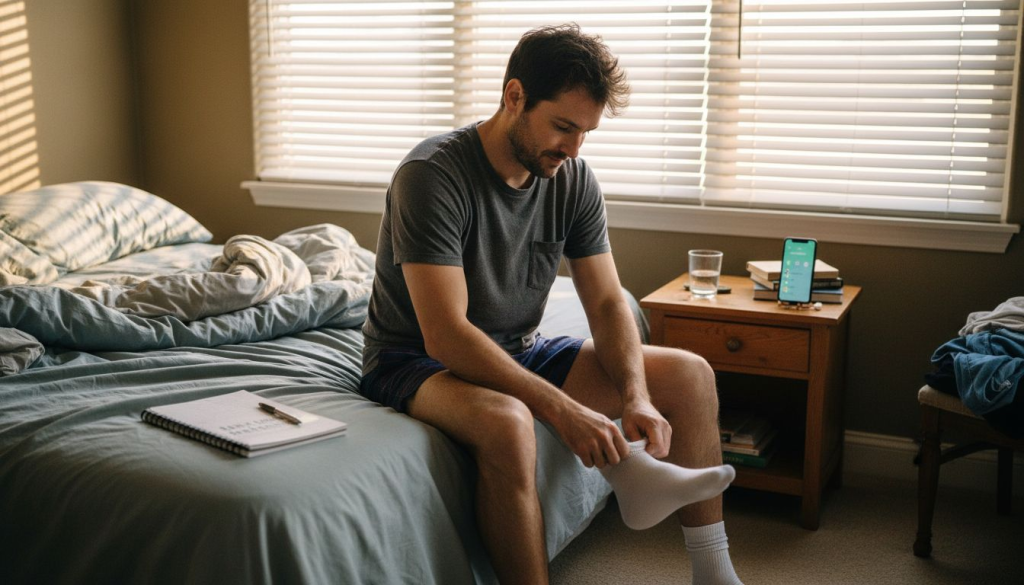
Short answer: Self care for men is the routine maintenance that keeps your body, mind and relationships working: regular movement, enough sleep, real meals, stress outlets, time with people you trust and routine checkups. The easiest way to make it stick is to plan it by the week, not the day. Public health guidance gives you clear targets: about 150 minutes of moderate activity plus 2 strength days a week, 7 or more hours of sleep a night, and screenings on a set schedule.[2][3][6]
Key Takeaways
- Self care is not pampering. It is the basic upkeep of four areas: body, mind, relationships and medical checkups.
- A weekly plan works better than a long daily checklist because most targets (exercise, strength training, social time) are weekly anyway.
- The CDC recommends 150 minutes of moderate activity and at least 2 days of muscle strengthening each week, and 7 or more hours of sleep for adults 18 to 60.[2][3]
- The NIMH lists simple mental health habits: daily walking, regular meals and water, consistent sleep, relaxation practice, gratitude and leaning on friends or family.[1]
- Symptoms such as poor sleep, low mood or loss of interest that last 2 weeks or more are a reason to see a professional, not to push harder on self care.[1]
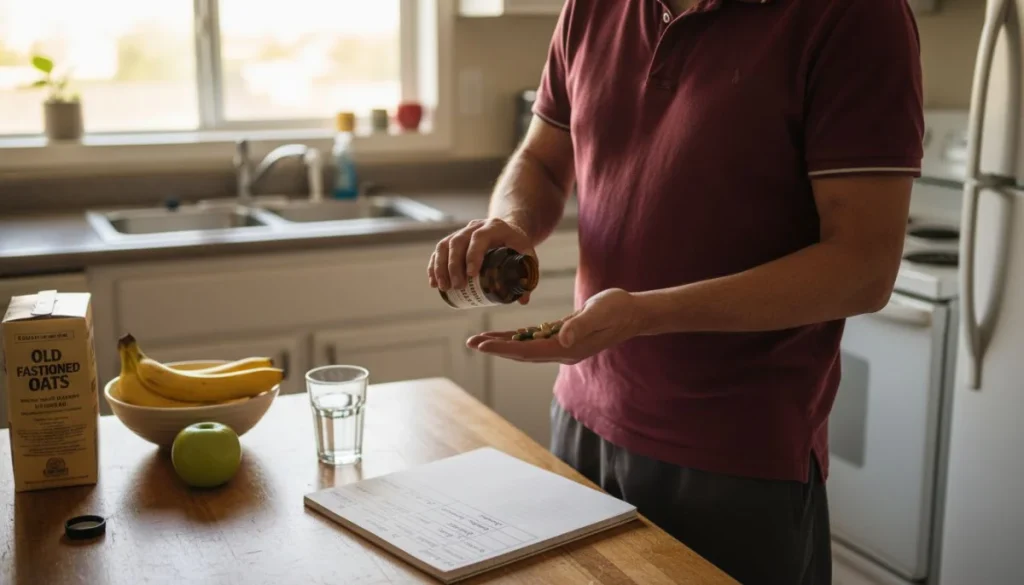
What Self Care for Men Actually Means
Many men hear “self care” and think of spa days or skincare ads. The useful definition is much plainer: the things you do on purpose to keep your health from drifting. Think of it like maintaining a truck. Nobody waits for the engine to seize before changing the oil.
A practical self care routine covers four areas:
- Body: movement, strength, sleep, food, water and how much you drink.
- Mind: stress outlets, focus, mood and knowing when to get help.
- Relationships: friends, partner, family and community.
- Checkups: blood pressure, cholesterol, blood sugar, dental, eye and vaccine schedules.
Men often handle the first area reasonably well (or at least think about it) and skip the other three. That is where a written weekly plan helps: it makes the invisible items visible.
Why a Weekly Plan Beats a Daily Checklist
Daily routines collapse when one bad day knocks out the whole list. A weekly plan has slack built in. If you miss a Tuesday walk, you still have six days to hit 150 minutes. The CDC itself frames activity this way: 150 minutes of moderate activity a week can be spread out, for example about 30 minutes on five days.[2]
A weekly structure also matches how the other pieces work. Strength training is counted in days per week. Social time usually happens on weekends or specific evenings. Medical appointments are booked months ahead. Only sleep and meals truly need to happen every day, so those get a simple daily anchor and everything else gets a slot on the calendar.
If you want to understand why repetition matters more than intensity, our guide on how long it takes to form a habit covers the habit side in detail. Your mornings are covered in a healthy morning routine.
The Weekly Wellness Routine for Men (Table)
Use this as a template. Each line points to the target from a public health source and to a deeper guide on the same topic.
| Area | Weekly target | How to schedule it | Deep dive |
|---|---|---|---|
| Cardio | 150 minutes moderate (or 75 minutes vigorous)[2] | 30 minute walks or rides on 5 days | Benefits of exercise |
| Strength | At least 2 days[2] | Two fixed sessions, for example Monday and Thursday | Bodyweight workouts |
| Sleep | 7 or more hours a night (ages 18 to 60)[3] | Same bedtime and wake time every day, screens off 30 minutes before bed | How to sleep better |
| Food and water | Regular, balanced meals and plenty of water[1] | One meal prep block on Sunday | Meal prep for beginners |
| Alcohol | If you drink, 2 drinks or less in a day[4] | Pick alcohol free days in advance | How much alcohol is too much |
| Stress | A regular relaxation practice[1][7] | 10 to 15 minutes of breathing, meditation, yoga or journaling, booked like a meeting | Stress symptoms in men |
| Relationships | Regular contact with people who support you[1][5] | One call midweek, one in person plan on the weekend | Male loneliness and friendship |
| Checkups | Blood pressure at least yearly, plus age based screenings[6] | One “admin hour” a month to book and follow up | Health screenings for men |
Body: Movement, Sleep and Fuel
Movement
The CDC target for adults is 150 minutes a week of moderate intensity activity (brisk walking counts), or 75 minutes of vigorous activity, or a mix, plus at least 2 days of muscle strengthening.[2] You do not need a gym for either. Walking, cycling, yard work, push ups, squats and carrying heavy groceries all count toward something. The NIMH notes that even 30 minutes of walking a day can help mood, and that shorter bouts add up if you cannot do it all at once.[1]
Sleep
The CDC recommends 7 or more hours for adults 18 to 60, 7 to 9 hours for ages 61 to 64, and 7 to 8 hours from 65 on.[3] Its practical tips are the core of any sleep routine: keep the same bed and wake times, keep the bedroom quiet, calm and cool, put screens away at least half an hour before bed, skip large meals and alcohol close to bedtime and limit caffeine in the afternoon and evening.[3] If you regularly struggle to sleep, the CDC advises talking to a healthcare provider rather than just trying harder.
Food, water and alcohol
The NIMH keeps nutrition advice simple: regular, balanced meals and plenty of water, and cutting back on caffeine or alcohol if they affect your mood.[1] Mayo Clinic adds fruits, vegetables and whole grains as the base of a stress resilient diet.[7] For alcohol, the CDC defines moderate drinking for men as 2 drinks or less in a day, and notes that adults can choose not to drink at all.[4]
Mind: Stress Outlets and Mental Health
Mental self care is where men tend to fall behind, partly because the problems are quieter. The NIMH list of self care habits is short and doable:[1]
- Try a relaxation practice (meditation, muscle relaxation or breathing exercises) and schedule it regularly.
- Set goals and priorities, say no to new tasks when you are overloaded and notice what you did get done each day.
- Practice gratitude by naming specific things you are thankful for.
- Notice negative or unhelpful thoughts and question them.
- Stay connected with friends or family who can give emotional and practical support.
Mayo Clinic’s stress relief list overlaps and adds a few that suit many men well: getting active, setting boundaries and delegating, yoga, keeping a journal, and making time for music or a hobby.[7] Laughter also has a place. Mayo Clinic describes how a good laugh first stimulates and then calms the stress response, which can leave you more relaxed, while noting that it is only one tool and that people with mental health concerns should see a licensed professional.[8]
When self care is not enough
Self care supports mental health. It does not replace treatment. The NIMH advises seeking professional help if severe or distressing symptoms last 2 weeks or more, such as trouble sleeping, appetite or weight changes, struggling to get out of bed because of mood, trouble concentrating, losing interest in things you usually enjoy, or being unable to handle usual tasks.[1] Your primary care provider can refer you to a mental health professional. If you or someone you know is in crisis or thinking about suicide, call or text 988 (the Suicide and Crisis Lifeline, available 24 hours a day) or call 911 in an emergency.[1] Our guide to men’s mental health goes further.
Relationships: The Most Skipped Part of Self Care
The CDC states plainly that social connections are important to mental and physical health. Strong relationships may lower the risk of heart disease, stroke, dementia, depression and anxiety, and connection can help people manage stress and keep up healthy eating, activity and sleep.[5]
For many men, adult friendships fade because nothing is scheduled. Treat them like any other appointment:
- Midweek: one call or message that is not about logistics.
- Weekend: one in person plan, even a short one (coffee, a walk, a game).
- Monthly: something that combines two goals, such as a pickup game, a hike or volunteering, which Mayo Clinic lists as a way to connect and get support.[7]
- At home: a regular, phone free block of time with your partner or family.
Checkups: The Self Care You Book in Advance
Preventive care is the least exciting part of the plan and often the most valuable, because many common problems do not cause symptoms early. MedlinePlus gives this schedule for men ages 40 to 64 (talk with your doctor about what applies to you):[6]
- Blood pressure: at least once a year, more often with certain conditions or a family history.
- Cholesterol: every 4 to 6 years if you have no risk factors, more often otherwise.
- Diabetes: every 3 years starting at 35 if you are overweight or have obesity.
- Colorectal cancer: from 45 to 75, for example a colonoscopy every 10 years or a stool based (FIT) test every year.
- Dental: once or twice a year.
- Eyes: every 2 to 4 years at 40 to 54 and every 1 to 3 years at 55 to 64, and at least yearly with diabetes.
- Vaccines: a flu shot every year and a tetanus booster every 10 years, plus shingles from 50.
A simple trick: block one “health admin hour” each month to book appointments, refill prescriptions and review results. It turns a vague worry into a 60 minute task.
A Sample Week
- Monday: strength session, 10 minute wind down before bed.
- Tuesday: 30 minute walk, call a friend.
- Wednesday: 30 minute walk or ride, alcohol free evening.
- Thursday: strength session, journal for 10 minutes.
- Friday: 30 minute walk, phone free dinner with partner or family.
- Saturday: longer activity with someone else (hike, game, yard project).
- Sunday: meal prep, plan the week, monthly health admin hour if it falls this week.
That covers the CDC activity targets, gives sleep and stress a regular slot, and puts people back on the calendar. Adjust the days to your work schedule; what matters is that each item has a home.
Where Supplements Fit (and Where They Do Not)
Supplements are optional and come after the basics above. They cannot make up for short sleep, no exercise or skipped checkups. If you do use one, read the label, check it with your doctor or pharmacist (especially if you take prescription medication) and choose brands that disclose exact amounts. Our guide on how to read supplement labels explains what to look for.
Ultra Bann is a male vitality supplement by DL Bioproducts taken as one capsule every 2 days. Each serving lists seven botanicals with their exact amounts and no proprietary blend: Thai Butea superba, Panax ginseng, Cynomorium songaricum, black ginger, tongkat ali, epimedium and reishi, 800 mg in total. You can see the full label or visit the Ultra Bann shop. It is not a substitute for the routine in this article or for medical care.
Frequently Asked Questions
What are some simple self care ideas for men?
Take a daily 30 minute walk, keep a fixed bedtime and wake time, eat regular meals and drink water, schedule two strength sessions a week, call a friend midweek, write down a few things you are grateful for and book your yearly blood pressure check.[1][2][3][6]
How do I start a self care routine if I have no time?
Start with one anchor per area: a 10 minute walk after lunch, the same wake time every day, one weekly call with a friend and one appointment you have been putting off. Short bouts of activity add up, according to the NIMH, so you do not need long blocks to begin.[1]
Is self care just for mental health?
No. Self care covers physical health (activity, sleep, food, alcohol), mental health (stress and mood), relationships and preventive checkups. They affect each other: the CDC notes that social connection supports healthy eating, activity and sleep.[5]
How much exercise should a man get each week?
The CDC recommends 150 minutes of moderate activity or 75 minutes of vigorous activity a week, plus at least 2 days of muscle strengthening.[2]
When should I see a doctor instead of relying on self care?
See a professional if symptoms like sleep problems, low mood, loss of interest or trouble functioning last 2 weeks or more, and call or text 988 right away if you are in crisis.[1] For physical health, keep your regular screening schedule even when you feel fine.[6]
References
- National Institute of Mental Health. Caring for Your Mental Health.
- Centers for Disease Control and Prevention. Physical activity recommendations for adults.
- Centers for Disease Control and Prevention. Sleep: how much adults need and tips for better sleep.
- Centers for Disease Control and Prevention. Moderate alcohol use.
- Centers for Disease Control and Prevention. Social connectedness and health.
- MedlinePlus Medical Encyclopedia. Health screenings for men ages 40 to 64.
- Mayo Clinic. Stress relievers: Tips to tame stress. 2023.
- Mayo Clinic. Stress relief from laughter? It’s no joke.
These statements have not been evaluated by the Food and Drug Administration. This product is not intended to diagnose, treat, cure or prevent any disease. This article is for information only and is not medical advice.
Ultra Bann natural male vitality support
1 capsule every 2 days. Free US shipping and a 60-day money-back guarantee on your first order.
See Ultra BannThese statements have not been evaluated by the Food and Drug Administration. This product is not intended to diagnose, treat, cure, or prevent any disease.