

Short answer: If you mean the physical side (fastest arousal, quickest recovery, highest testosterone), most men peak sexually in their late teens and twenties. Testosterone then falls slowly, about 1% a year from somewhere between age 30 and 40 depending on the source, and erections tend to take longer and recovery time grows. But there is no single “peak age” for satisfaction: health, sleep, stress, medications and the relationship usually matter more than the number on your birth certificate, and many changes blamed on age are actually medical issues worth checking with a doctor.
Key Takeaways
- Physical responsiveness is usually highest in the late teens and twenties; that is the narrow sense in which men “peak.”
- Testosterone declines gradually, roughly 1% per year in adulthood. Mayo Clinic notes only about 10% to 25% of older men have levels considered low.[1]
- With age, erections may take longer and be less firm, responses become slower, and repeated ejaculations become harder (a longer recovery or “refractory” period).[2][3]
- Erectile problems become more common with age, but they are often linked to heart, blood vessel, blood sugar or medication issues, so they are a reason to see a doctor, not just to “accept aging.”[3][4]
- Aging by itself does not prevent a man from enjoying a sexual relationship, and staying active in midlife is associated with better sex later.[2]
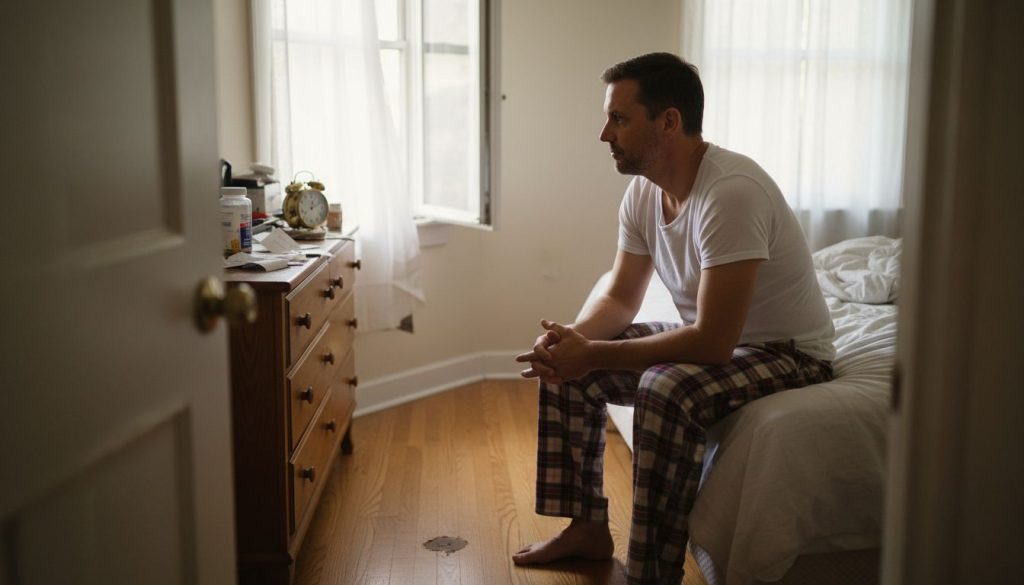
When Do Men Peak Sexually? What “Peak” Really Means
The popular idea that men “peak at 18” comes from looking at a few measurable things: how quickly arousal happens, how often men want sex, and how fast they can recover and go again. On those measures, the late teens and twenties really are the high point. Hormone levels are at their adult maximum, responses are fast, and recovery between episodes is short.
But “peak” can mean different things, and they do not all happen at the same age:
- Physical peak: speed of arousal, firmness and recovery. Usually late teens to twenties.
- Hormonal peak: testosterone is highest in early adulthood, then declines gradually rather than suddenly.[1][4]
- Satisfaction and confidence: these depend heavily on experience, communication, health and the relationship, so they can stay steady or improve well past the physical peak.
So the honest answer to “when do men peak sexually” is: physically early, but the overall experience does not have to follow the same curve.
What Changes Decade by Decade
Every man ages differently. The table below summarizes typical patterns, based on the gradual changes described by Mayo Clinic, MedlinePlus and Cleveland Clinic. It is a general guide, not a checklist: a fit, well-rested 55-year-old can feel better than a stressed, inactive 35-year-old.
| Decade | What often changes | What deserves attention |
|---|---|---|
| 20s | Highest testosterone, fastest arousal and shortest recovery. Performance worry and inexperience are more common. | Communication, managing performance anxiety, safe sex. |
| 30s | Testosterone begins a slow decline of about 1% a year (Mayo Clinic says after 30, Cleveland Clinic says from the late 30s).[4][5] Work, family stress and sleep loss rise. | Sleep, exercise, stress, protecting time together. |
| 40s | Mayo Clinic describes testosterone falling about 1% a year after 40.[1] Arousal may take longer; erections may be less firm. Waist size, blood pressure and blood sugar start to matter more. | Checkups, weight and waist, alcohol, a doctor visit for persistent changes. |
| 50s | Slower, less intense responses are common; recovery between ejaculations lengthens.[2] More men take medications that can affect function. | Medication review, heart and metabolic health, patience and variety. |
| 60s and beyond | Erections happen less often and may need more direct stimulation; desire varies widely. Many men stay sexually active, and fertility does not stop at a set age.[2] | Staying active, open conversation, adapting routines, regular medical care. |
Your 20s
This is the physical high point, but not always the most satisfying stage. Many men in their twenties report more anxiety about performance and less understanding of their own and their partner’s needs. If problems appear at this age, they are more often linked to stress, anxiety, alcohol, recreational drugs or relationship factors than to hormones. Persistent problems still deserve a medical visit.
Your 30s
Testosterone starts its slow slide, but the drop is small year to year. What changes more in this decade is life: long work hours, young children, short sleep and less exercise. Mayo Clinic notes that emotional changes and stress can change your interest in sex.[4] For many men, the 30s are the decade where habits start to show.
Your 40s
Arousal may take a little longer, and erections may not be as firm as they were.[4] This is also when blood pressure, cholesterol and blood sugar problems often appear, and those affect blood flow everywhere in the body. Cleveland Clinic lists being older than 45 as a risk factor for low testosterone.[5] A yearly checkup becomes more valuable from here; see our guide to health screenings for men.
Your 50s
MedlinePlus describes sexual responses becoming “slower and less intense” with age, and notes that aging men are often less able to have repeated ejaculations.[2] That longer recovery time is normal. This is also the decade when many men start blood pressure or other medications, and Cleveland Clinic notes that erectile problems are a common side effect of many prescription drugs, including some antidepressants, blood pressure medications and diuretics.[3] Never stop a prescribed medication on your own; ask your doctor whether an alternative exists.
Your 60s and beyond
Erections may happen less often than in youth, which MedlinePlus calls normal.[2] Sperm production slows, but MedlinePlus also points out that age does not predict male fertility and some older men do father children. Most importantly, it states that aging by itself does not prevent a man from enjoying sexual relationships, and that men who stay sexually active in middle age are more likely to have good sex when older.[2]

Why These Changes Happen
Hormones
Testosterone helps drive desire and plays a role in erections. It declines gradually across adulthood rather than crashing at a specific age.[1][4] Mayo Clinic stresses that only about 10% to 25% of men have levels considered low, and that symptoms such as lower desire and weaker erections are not specific to low testosterone, because age, medicines and other conditions can cause them too.[1] If you want to understand your numbers, see normal testosterone levels and signs of low testosterone.
Blood vessels and nerves
An erection is mostly a blood flow event. Cleveland Clinic names conditions that affect blood delivery to the penis as the most common cause of erectile dysfunction, including atherosclerosis, high blood pressure and high cholesterol, and lists diabetes and diabetes-related nerve damage as well.[3] These conditions become more common with each decade, which is a big part of why function changes with age.
Medications, mood and lifestyle
Medicines for blood pressure and other conditions can affect erections.[2][3] Stress, depression and relationship strain affect desire at any age.[4] Sleep, alcohol, smoking, weight and physical activity all feed into the same systems. MedlinePlus goes as far as stating that 90% of erectile problems are believed to be caused by a medical problem rather than a psychological one,[2] which is another reason to look for a cause rather than blame age.
How Common Are Erection Problems by Age?
Cleveland Clinic reports that erectile dysfunction affects over 50% of males between the ages of 40 and 70, and notes the true figure may be higher because many men do not seek help.[3] It is the most common sexual concern men bring to providers, especially as they age and develop other health issues.
The key point for this article: “common” does not mean “just aging.” Cleveland Clinic states that in many cases erectile problems can be the first symptom of another underlying problem, including heart disease.[3] A man in his 40s or 50s who notices new, persistent changes is giving his doctor useful information about his blood vessels.
Doctor First: When to Get Checked
See a doctor if any of the following apply:
- New or persistent trouble getting or keeping an erection, at any age.
- Loss of morning or spontaneous erections, or a clear drop in desire, which Cleveland Clinic lists among the most specific signs of low testosterone.[5]
- Changes that started after a new medication.
- Changes alongside chest pain, shortness of breath on exertion, high blood pressure, diabetes or heavy snoring.
- Changes that cause distress for you or strain in your relationship.
What a checkup may include
Expect questions about your symptoms, medications, sleep, alcohol and mood, plus blood pressure, blood sugar and cholesterol checks. If low testosterone is suspected, Cleveland Clinic explains that testing usually requires two separate morning blood samples, that levels below 300 ng/dL are considered low in adults, and that the diagnosis requires symptoms along with low levels.[5] Mayo Clinic adds that experts suggest testing older men only if they have symptoms.[1] For timing tips, see the best time to check testosterone levels.
Habits That Help at Every Age
- Move most days: regular activity supports heart health, weight and energy.
- Protect sleep: short sleep affects mood, energy and desire.
- Watch your waist, blood pressure and blood sugar: these drive the blood vessel problems behind many erection changes.
- Limit alcohol and do not smoke: both affect circulation and performance.
- Talk to your partner: Mayo Clinic recommends being honest about what you are experiencing physically and emotionally, and setting aside time to be together.[4]
- Stay active sexually through midlife if that is right for you; MedlinePlus links it to better sex later.[2]
No supplement is a substitute for a medical evaluation of new sexual symptoms. For reference, Ultra Bann is a botanical male vitality supplement by DL Bioproducts; its full label is listed on our ingredients page.
Frequently Asked Questions
What age do men peak sexually?
Physically, most men peak in their late teens and twenties, when testosterone is highest and arousal and recovery are fastest. Satisfaction, confidence and closeness do not follow the same curve and often stay strong, or improve, for decades.
Is it normal to need more time between sessions as you get older?
Yes. MedlinePlus notes that aging men are often less able to have repeated ejaculations and that responses become slower and less intense. A longer recovery period is an expected change, not a disease.
Does testosterone drop suddenly at 40 or 50?
No. It falls gradually, about 1% a year in adulthood according to Mayo Clinic and Cleveland Clinic, and only about 10% to 25% of men have levels thought to be low. There is no male equivalent of a sudden menopause.
Are erection problems just a normal part of aging?
They become more common with age, but they are frequently linked to treatable or important medical issues such as heart disease, diabetes, high blood pressure or medication side effects. That is why a doctor visit is the right first step.
Can men stay sexually active in their 60s and 70s?
Many do. MedlinePlus states that aging by itself does not prevent a man from enjoying sexual relationships. Good general health, managing chronic conditions and open communication with a partner help the most.
References
- Mayo Clinic Staff. Male menopause: Myth or reality? Mayo Clinic.
- MedlinePlus Medical Encyclopedia. Aging changes in the male reproductive system. U.S. National Library of Medicine.
- Cleveland Clinic. Erectile Dysfunction (ED): Causes, Diagnosis and Treatment.
- Mayo Clinic Staff. Sexual health and aging: Keep the passion alive. Mayo Clinic.
- Cleveland Clinic. Low Testosterone (Low T): Hypogonadism, Symptoms and Treatment.
These statements have not been evaluated by the Food and Drug Administration. This product is not intended to diagnose, treat, cure or prevent any disease. This article is for information only and is not medical advice.
Ultra Bann natural male vitality support
1 capsule every 2 days. Free US shipping and a 60-day money-back guarantee on your first order.
See Ultra BannThese statements have not been evaluated by the Food and Drug Administration. This product is not intended to diagnose, treat, cure, or prevent any disease.