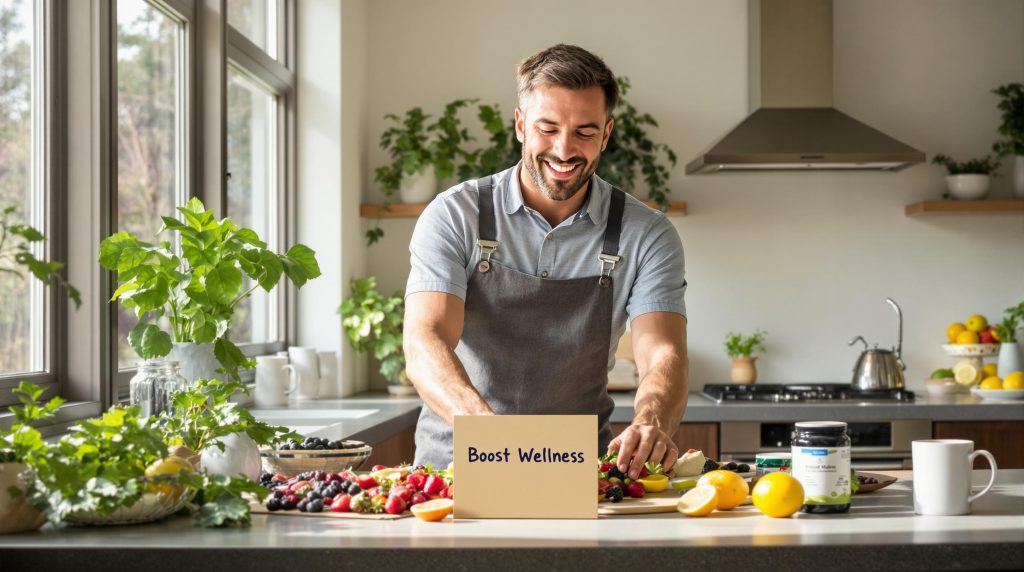
Short answer: The foods highest in antioxidants are plants: spices and herbs, berries, other fruits, nuts, dark chocolate and colorful vegetables. Eating more of them is consistently linked with lower rates of heart disease and cancer. High-dose antioxidant pills are a different story: in large trials of men, vitamin E, vitamin C, selenium and beta-carotene supplements did not prevent cancer or heart disease, and some raised risk. For most men, natural antioxidants should come from the plate, not a capsule.
Key Takeaways
- A database of more than 3,100 foods found that antioxidant content varies by several thousand-fold, with spices, herbs, berries, fruits, nuts, chocolate and vegetables at the top of common foods.[1]
- A review of 95 observational studies covering over 2 million people linked higher fruit and vegetable intake with lower cardiovascular disease and cancer risk.[2]
- In the SELECT trial of more than 35,000 men, 400 IU of vitamin E a day led to a 17% relative increase in prostate cancer compared with placebo.[3]
- High-dose beta-carotene increased lung cancer risk, mainly in smokers and people exposed to asbestos, and the USPSTF recommends against beta-carotene or vitamin E supplements for cancer or heart disease prevention.[2]
- You can meet the vitamin C and vitamin E targets for men (90 mg and 15 mg a day) with ordinary foods such as peppers, citrus, kiwifruit, sunflower seeds and almonds.[4][5]
What Antioxidants Are (and Why Food Matters More Than the Label)
Your cells constantly produce reactive, oxygen-containing molecules as a normal part of making energy. When these build up faster than the body can neutralize them, the result is called oxidative stress, which can damage cells and is thought to contribute to chronic diseases such as heart disease and cancer.[2]
The body defends itself in three ways. The most important layer is its own antioxidant enzymes. On top of that come antioxidants from food (vitamins C and E, carotenoids and thousands of plant compounds often called phytochemicals or polyphenols) and, for some people, antioxidants from supplements.[2]
Two points from the NIH’s National Center for Complementary and Integrative Health are worth remembering. First, different antioxidants are not interchangeable: vitamin C in an orange does not do the same job as a polyphenol in blueberries. Second, very large amounts of a single antioxidant can interfere with normal cell functions.[2] That is the main reason “more is better” breaks down once antioxidants are taken as concentrated pills.
Foods High in Antioxidants: A Practical List for Men
The largest public antioxidant database, published in Nutrition Journal in 2010, measured the total antioxidant capacity of more than 3,100 foods, drinks, spices, herbs and supplements bought around the world. Its key findings: plant foods add far more antioxidants to the diet than animal foods, spices and herbs were the most concentrated sources, and berries, fruits, nuts, chocolate and vegetables were the strongest common foods.[1] The authors also found large differences between samples of the same food, depending on origin and brand, so treat any single “antioxidant score” as approximate.
The table below combines that ranking with nutrient amounts from the NIH Office of Dietary Supplements.
| Food | Main antioxidants | Amount per serving (where measured) |
|---|---|---|
| Sweet red pepper, raw (1/2 cup) | Vitamin C, carotenoids | 95 mg vitamin C[4] |
| Orange (1 medium) | Vitamin C, flavonoids | 70 mg vitamin C[4] |
| Kiwifruit (1 medium) | Vitamin C | 64 mg vitamin C[4] |
| Broccoli, cooked (1/2 cup) | Vitamin C, vitamin E | 51 mg vitamin C; 1.2 mg vitamin E[4][5] |
| Strawberries, sliced (1/2 cup) | Vitamin C, polyphenols | 49 mg vitamin C[4] |
| Brussels sprouts, cooked (1/2 cup) | Vitamin C | 48 mg vitamin C[4] |
| Sunflower seeds, dry roasted (1 oz) | Vitamin E | 7.4 mg vitamin E[5] |
| Almonds, dry roasted (1 oz) | Vitamin E, polyphenols | 6.8 mg vitamin E[5] |
| Hazelnuts, dry roasted (1 oz) | Vitamin E | 4.3 mg vitamin E[5] |
| Spinach, boiled (1/2 cup) | Vitamin E, carotenoids | 1.9 mg vitamin E[5] |
| Berries (blueberries, blackberries and others) | Polyphenols (anthocyanins) | Among the highest common foods in total antioxidant capacity[1] |
| Spices and dried herbs | Polyphenols | The most antioxidant-dense category measured[1] |
| Dark chocolate | Polyphenols (flavanols) | High scoring among common foods[1] |
How much is enough?
The Recommended Dietary Allowance for adult men is 90 mg of vitamin C and 15 mg of vitamin E per day. Men who smoke need an extra 35 mg of vitamin C daily.[4][5] A red pepper at lunch plus an orange covers vitamin C. A small handful of sunflower seeds and almonds gets you most of the way on vitamin E. For polyphenols there is no official target; the practical goal is variety: something colorful at every meal, a daily serving of berries or other fruit, nuts most days, and generous use of herbs and spices.
What the Big Supplement Trials in Men Actually Showed
Because diets rich in fruits and vegetables track with better health, researchers spent decades testing whether antioxidant pills could deliver the same benefit. Many of the largest trials enrolled men. The results were disappointing, and in some cases harmful.
SELECT: vitamin E, selenium and prostate cancer
The Selenium and Vitamin E Cancer Prevention Trial enrolled more than 35,000 men aged 50 and older between 2001 and 2004 at over 400 sites in the United States, Puerto Rico and Canada. Men took vitamin E (400 IU a day), selenium, both, or placebo.[3] Participants were told to stop taking the supplements in October 2008. After further follow-up, results published in JAMA in October 2011 showed that men taking vitamin E alone had a 17% relative increase in prostate cancer compared with placebo. In absolute terms, that was about 76 cases per 1,000 men over seven years instead of 65, or 11 extra cancers per 1,000 men.[3] The National Cancer Institute’s answer to whether men should take vitamin E or selenium for cancer prevention is a plain “no.”[3]
Beta-carotene and smokers
High-dose beta-carotene supplements increased lung cancer risk, with the strongest effect in smokers and people exposed to asbestos, and may also raise the risk of death from cardiovascular disease.[2] In 2022 the U.S. Preventive Services Task Force recommended against beta-carotene for preventing cancer or heart disease, based on studies with more than 90,000 participants where harms outweighed benefits. Even in the AREDS2 eye study, beta-carotene increased lung cancer risk in former smokers, which is why it was replaced with lutein and zeaxanthin.[2]
Vitamins C and E in male doctors
In the Physicians’ Health Study II, men took 500 mg of vitamin C daily and 400 IU of vitamin E every other day for an average of 8 years. The supplements did not reduce prostate cancer or total cancer, and vitamin C had no effect on major cardiovascular events.[4] In the same trial, the vitamin E group had a higher risk of hemorrhagic stroke, and a separate Finnish trial in male smokers taking 50 mg a day saw a similar signal.[5]
Antioxidants and male fertility
Antioxidants are heavily marketed for sperm health. A 2022 Cochrane review of 90 trials in 10,303 subfertile men found that antioxidants may increase live birth rates, but the evidence was of very low certainty and the effect disappeared when trials at high risk of bias were removed. Mild stomach upset was slightly more common with antioxidants (2% to 7% vs 2%).[6] Couples dealing with fertility problems should work with a fertility specialist rather than self-treat.
Summary of the evidence
| Antioxidant supplement | Outcome tested | Result |
|---|---|---|
| Vitamin E (400 IU/day) | Prostate cancer (SELECT) | 17% relative increase vs placebo[3] |
| Beta-carotene (high dose) | Lung cancer, heart disease | Higher lung cancer risk in smokers; USPSTF recommends against[2] |
| Vitamin C + vitamin E | Cancer, cardiovascular events (PHS II) | No reduction[4] |
| Vitamin E, C, beta-carotene | Cataracts (117,272 people) | No effect[2] |
| Mixed antioxidants | Male subfertility | Possible benefit, very low certainty[6] |
Why Food Works and Pills Often Do Not
Researchers offer three main explanations.[2] First, people who eat more produce also tend to exercise more, smoke less and eat less processed food, so part of the benefit seen in observational studies may come from lifestyle rather than antioxidants themselves. Second, a whole food delivers hundreds of compounds plus fiber, and a purified chemical may act differently from that mixture. Third, supplement doses are often many times higher than food provides, and high doses can disrupt normal cell signaling.
The NCCIH notes one bright spot where supplements were tested in a specific condition: in the AREDS trial, a high-dose formula of vitamins C and E, beta-carotene, zinc and copper reduced the risk of advanced age-related macular degeneration by about 25% in people who already had intermediate disease.[2] That is a targeted, doctor-guided use, not a reason for healthy men to take antioxidant pills.
Antioxidant Supplement Safety: Who Should Be Careful
- Smokers and former smokers: avoid beta-carotene supplements because of the lung cancer findings.[2]
- Men on blood thinners: large doses of vitamin E can increase bleeding risk with warfarin and antiplatelet drugs.[5]
- Men in cancer treatment: some chemotherapy and radiation work partly through oxidative damage, and antioxidants might interfere. Check with your oncology team first.[2]
- Men taking cholesterol-lowering drugs: in one study, a combination of vitamins E and C, selenium and beta-carotene reduced the effect of two such drugs.[2]
- High-dose vitamin C users: doses near the 2,000 mg upper limit can cause diarrhea, nausea and cramps, and may worsen iron overload in hemochromatosis.[4]
The adult upper limit for vitamin E is 1,000 mg a day from supplements, but the SELECT harm appeared at 400 IU (about 180 mg), far below that ceiling.[5] If you want to check whether a product you already take is reasonable, our guides on whether men should take a multivitamin and dangerous supplement ingredients walk through what to look for.
Where Ultra Bann Fits
Ultra Bann is not an antioxidant vitamin supplement. It is a natural male vitality supplement by DL Bioproducts made from seven botanicals, taken as one capsule every 2 days: Thai Butea superba 345 mg, Panax ginseng 110 mg, Cynomorium songaricum 85 mg, black ginger (Kaempferia parviflora) 85 mg, tongkat ali 85 mg, epimedium 45 mg and reishi 45 mg, for 800 mg in total, with every amount listed on the label and no proprietary blend. It contains no added vitamin C, vitamin E, selenium or beta-carotene, so it does not overlap with the high-dose products tested in the trials above.
Several of these herbs, such as reishi and Panax ginseng, contain their own plant compounds, but no herbal product replaces a diet built on fruits, vegetables, nuts and spices. You can review the full Ultra Bann label or see the product on the Ultra Bann shop page; first orders include free US shipping and a 60-day money-back guarantee.
Frequently Asked Questions
What food has the most antioxidants?
By concentration, dried spices and herbs ranked highest in the 3,100-food database, followed among everyday foods by berries, other fruits, nuts, dark chocolate and vegetables.[1] Since you eat spices in small amounts, berries, nuts and colorful vegetables usually contribute more in practice.
Are antioxidant supplements good for men?
For healthy men, the large trials do not support them. Vitamin E raised prostate cancer risk in SELECT, beta-carotene raised lung cancer risk in smokers, and vitamin C plus E did not prevent cancer or heart disease in male physicians.[2][3][4] A doctor may still recommend a specific supplement for a diagnosed deficiency or condition.
Can you get too many antioxidants from food?
It is very hard to overdo antioxidants from a normal diet. The problems seen in research came from concentrated, high-dose supplements of single compounds.[2]
Do antioxidants help sperm quality or fertility?
The evidence is weak. A Cochrane review found a possible small increase in live births, but at very low certainty and not in the higher-quality trials.[6] Talk to a fertility specialist before choosing a product.
Are natural antioxidants better than antioxidant supplements?
For prevention in healthy people, the evidence favors food. Diets rich in fruits and vegetables are linked with lower heart disease and cancer risk, while isolated high-dose antioxidants have mostly failed in trials and sometimes caused harm.[2][3]
References
- Carlsen MH, Halvorsen BL, Holte K, et al. The total antioxidant content of more than 3100 foods, beverages, spices, herbs and supplements used worldwide. Nutrition Journal. 2010;9:3. Harvard DASH record
- National Center for Complementary and Integrative Health. Antioxidant Supplements: What You Need To Know. Updated July 2023. nccih.nih.gov
- National Cancer Institute. Selenium and Vitamin E Cancer Prevention Trial (SELECT): Questions and Answers. cancer.gov
- NIH Office of Dietary Supplements. Vitamin C: Fact Sheet for Health Professionals. ods.od.nih.gov
- NIH Office of Dietary Supplements. Vitamin E: Fact Sheet for Health Professionals. ods.od.nih.gov
- Cochrane. Antioxidants for male subfertility (review summary, 2022). cochrane.org
These statements have not been evaluated by the Food and Drug Administration. This product is not intended to diagnose, treat, cure or prevent any disease. This article is for information only and is not medical advice.
Ultra Bann natural male vitality support
1 capsule every 2 days. Free US shipping and a 60-day money-back guarantee on your first order.
See Ultra BannThese statements have not been evaluated by the Food and Drug Administration. This product is not intended to diagnose, treat, cure, or prevent any disease.