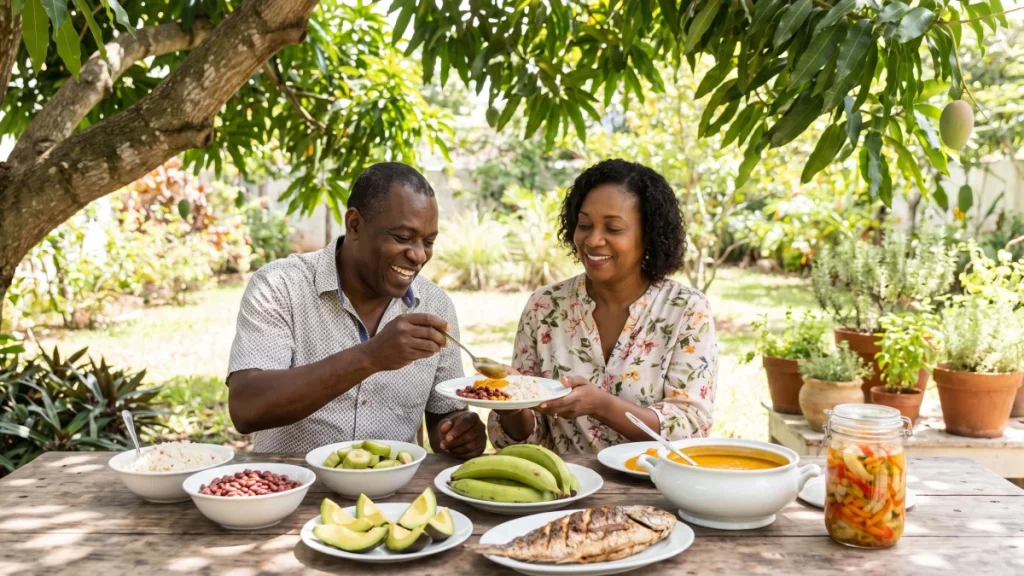
Short answer: Traditional Haitian food can be very healthy. The core of the kitchen (beans, leafy greens, vegetable stews like legim, fish, pumpkin, breadfruit and boiled plantain) fits what heart and diabetes guidelines recommend. The problems usually come from how dishes are finished: bouillon cubes and salty seasoning, deep frying, and big portions of white rice. Keep the dishes, change the salt, the oil and the proportions on the plate.
Key Takeaways
- Haitian and Caribbean cooking belongs to the African heritage way of eating, which is built on beans, greens, tubers, fish and spiced stews, with meat used mostly as flavoring.
- The most nutritious everyday dishes are diri ak pwa (with more pwa than diri), legim, soup joumou, pwason gwo sel, and boiled bannann, yanm or lam veritab.
- Salt is the main weak spot. The American Heart Association sets an upper limit of 2,300 mg of sodium a day and an ideal of 1,500 mg, and seasoning cubes add up quickly.[1]
- Use the plate method on a 9-inch plate: half vegetables, a quarter protein, a quarter rice, plantain or other starch.[3]
- Fritay (griyo, bannann peze, akra, pate) is part of the culture. Keep it for the weekend or special occasions rather than every day.
- High blood pressure is especially common among Black adults in the United States, so regular checks matter as much as what is on the plate.[2]
Is Haitian Food Healthy? What the Traditional Kitchen Gets Right
Haitian cooking grew out of African, Taíno, French and Spanish influences, and its foundation is mostly plants. Oldways, a nonprofit that maps heritage diets, groups the Caribbean with Africa, South America and the American South in what it calls the African Heritage Diet. It describes that pattern as plant based, rich in leafy greens, vegetables, beans and peas, tubers and fish, with rice and peas dishes in the Caribbean, hearty spiced soups and stews, and pickled vegetables. It also notes that meat traditionally played a small role, used for flavor or saved for special occasions.[4]
That description fits a Haitian kitchen well:
- Beans every day. Pwa nwa, pwa wouj and pwa kongo bring plant protein and fiber. Sòs pwa (bean sauce over rice) is basically a bean puree.
- Greens and vegetable stews. Legim mixes eggplant, cabbage, chayote (militon), carrots, spinach or watercress, usually with a small amount of meat or crab. Lalo (jute leaves) and zepina are cooked into sauces.
- Tubers and fruit starches. Yanm, patat, malanga, manyòk, lam veritab and green bannann are less processed starches than white bread or pasta.
- Fish and seafood. Pwason gwo sel, aransò (smoked herring) and lanbi (conch) are traditional on the coast and in the diaspora.
- Bold, fresh seasoning. Epis, the green base of parsley, scallions, garlic, peppers, thyme and sour orange or lime, carries a lot of flavor without needing much salt.
- Pikliz. Cabbage, carrots and hot peppers pickled in vinegar. It is a vegetable side as much as a condiment.
So the honest answer to “is Haitian food healthy” is: the ingredients are, and the risks sit in a few cooking habits that crept in over time, especially packaged seasoning cubes and frying.
Traditional Haitian Dishes, Ranked for Everyday Eating
None of these dishes is “bad.” The table below simply shows which ones work well most days and which are better as a treat, plus a small change that keeps the taste.
| Dish | What is in it | Everyday or occasional | Simple swap |
|---|---|---|---|
| Diri ak pwa / diri kole | Rice cooked with red, black or pinto beans | Everyday | Use more beans and less rice; cut the oil and the cube |
| Legim | Eggplant, cabbage, chayote, carrots, greens, a little meat | Everyday | Let the vegetables lead; skim fat from the meat |
| Soup joumou | Pumpkin, beef, vegetables, pasta | Weekly or festive | Extra vegetables, less pasta, half the bouillon |
| Pwason gwo sel | Fish poached with lime, peppers, onion | Everyday | Taste before adding salt; the name means coarse salt, not a lot of it |
| Boiled bannann, yanm, lam veritab | Whole starchy staples | Everyday | Keep to a quarter of the plate |
| Akasan | Corn flour drink with milk, cinnamon, sugar | Occasional | Less sugar, smaller cup, served with eggs or fruit |
| Griyo, tasso | Pork or goat marinated in citrus and epis, then fried | Occasional | Keep the marinade, then roast or air fry |
| Bannann peze, akra, pate | Twice fried plantain, fried malanga fritters, fried patties | Occasional | Smaller portion with lots of pikliz; boiled bannann on weekdays |
Smart Swaps: Salt, Oil, Frying and Rice
Salt and bouillon cubes
The American Heart Association recommends no more than 2,300 mg of sodium a day, with an ideal of no more than 1,500 mg for most adults. Americans average more than 3,100 mg, and the AHA notes that cutting about 1,000 mg a day can improve blood pressure for most people.[1] In many Haitian homes the biggest sodium source is not the salt shaker but seasoning cubes and powdered seasoning, often added to rice, sauce, soup and marinade in the same meal.
- Read the sodium line on your cube or seasoning label and count how many go into one pot.
- Cut the cubes by half for two weeks, then by half again. Taste adapts.
- Build flavor with more epis, garlic, thyme, cloves, sour orange, lime and a whole scotch bonnet (piman bouk) left in the pot.
- Rinse canned beans and salted fish (lanmori, aransò) well, and soak salt fish overnight.
Oil and frying
Frying is what turns lean pork shoulder into griyo and green plantain into bannann peze. Keep the traditional marinade and change the method on weekdays: roast griyo in a hot oven until the edges crisp, or use an air fryer. Measure the oil you pour into rice and sauce instead of free pouring. Fritay can stay for celebrations, Sunday or a night out.
Portion of rice
Rice is the center of many Haitian plates, and portions often fill half or more of it. The CDC explains that carbohydrate foods raise blood sugar, and that eating carbs together with protein, fat or fiber slows that rise.[3] Diri ak pwa already does this better than plain white rice. Push it further by making the bean share larger, serving rice on a quarter of the plate and filling the rest with legim, salad or pikliz.
Plantain: green or ripe
Green plantain contains more resistant starch, a type of starch that behaves more like fiber. A 2021 study of plantain flours in the journal Foods found that resistant starch fell as plantains ripened.[5] That was a lab study of flour, not people eating meals, so treat it as a useful hint rather than proof: boiled green bannann is a solid everyday choice, ripe or fried plantain fits better as a side.
How to Build a Healthier Haitian Plate
The CDC plate method is simple and fits Haitian food without changing the menu. Start with a 9-inch dinner plate, fill half with non-starchy vegetables, a quarter with lean protein, a quarter with carbohydrate foods, and drink water or an unsweetened drink.[3]
| Part of the plate | Share | Haitian choices |
|---|---|---|
| Non-starchy vegetables | Half | Legim, lalo, zepina, kalalou (okra), cabbage, salad, a generous side of pikliz |
| Protein | A quarter | Pwason, sardines, chicken, eggs, conch, or a big ladle of sòs pwa |
| Starch | A quarter | Diri ak pwa, boiled bannann, yanm, patat, lam veritab, mayi moulen |
| Fat and drink | Small amount | A few slices of zaboka (avocado), a little oil in cooking; water, unsweetened tea, lime water |
A sample day of Haitian food for steady energy
- Breakfast: boiled green bannann or yanm with eggs and a few slices of zaboka, or a small cup of akasan with less sugar next to eggs.
- Lunch: diri ak pwa (more pwa), pwason gwo sel or chicken in sòs, a big serving of legim and pikliz.
- Snack: whole fruit such as mango, orange or kenèp instead of juice, since juice raises blood sugar faster than whole fruit.[3]
- Dinner: a bowl of soup with vegetables and lam veritab, or roasted griyo with salad and boiled patat.
If you often feel heavy after lunch, our guide on why you feel tired after eating covers the role of portion size and refined starch. For batch cooking legim and pwa on Sunday, see meal prep for beginners.
Blood Pressure, Blood Sugar and the Caribbean Community
According to the CDC, 48.1% of US adults have high blood pressure, including 50% of men. Among non-Hispanic Black adults, a group that includes many Haitian and Caribbean Americans, the figure is 59.6%, and only 31.8% of those recommended blood pressure medicine have it under control, the lowest of the groups measured. The CDC also estimates that about 1 in 6 adults with high blood pressure do not know they have it.[2]
Diet is one lever, not the whole picture. Activity, sleep, alcohol (including rum at every fèt), stress and genetics all play a part. If you have high blood pressure, diabetes or kidney disease, ask your doctor or a registered dietitian for a personal sodium and carbohydrate target before changing your diet, and do not stop or change any medicine on your own. Have your blood pressure and blood sugar checked at your regular health screening, and read our guide to supplements that can raise blood pressure if you take any.
Where Supplements Fit (and Where They Do Not)
No capsule replaces a plate of pwa, legim and fish. Food comes first. Some men also choose an herbal supplement for general vitality. Ultra Bann is a natural male vitality supplement by DL Bioproducts, taken as one capsule every 2 days, with seven botanicals listed by amount on the label (no proprietary blend). It is not a substitute for a healthy diet, blood pressure care or medical treatment. If you are curious, you can read the full label or visit the Ultra Bann shop, where first orders ship free in the US with a 60-day money-back guarantee. If you take blood pressure or diabetes medicine, check with your doctor before starting any supplement.
Frequently Asked Questions
Is Haitian food healthy?
Mostly, yes. Traditional Haitian food is built on beans, vegetables, tubers, fish and spiced stews, which matches the African heritage diet pattern described by Oldways. The main concerns are high sodium from seasoning cubes, frequent frying and large rice portions, all of which are easy to adjust.
Is diri ak pwa (rice and beans) good for you?
It is one of the better rice dishes because the beans add protein and fiber, which the CDC notes help slow the rise in blood sugar from carbohydrates. Make the bean share bigger, use less oil and fewer cubes, and keep it to about a quarter of the plate.
What is the healthiest Haitian dish?
Legim and pwason gwo sel are strong everyday choices: mostly vegetables or lean fish, cooked in a sauce rather than fried. Soup joumou is also nutritious when made with plenty of vegetables and less bouillon.
Are fried plantains (bannann peze) unhealthy?
They are fine occasionally. Frying adds a lot of oil, so on most days boiled green bannann is the better option. Serve fried plantain in a small portion with pikliz and a vegetable.
How can I cut salt in Haitian cooking without losing flavor?
Reduce bouillon cubes gradually, rely on fresh epis, garlic, thyme, cloves, citrus and hot peppers, soak salt fish, and rinse canned beans. Taste before adding salt at the end.
References
- American Heart Association. How much sodium should I eat per day?
- Centers for Disease Control and Prevention. High Blood Pressure Facts (updated 2026).
- Centers for Disease Control and Prevention. Diabetes Meal Planning (plate method and portion sizes).
- Oldways. African Heritage Diet background.
- Udomkun P, Masso C, Swennen R, et al. How Does Cultivar, Maturation, and Pre-Treatment Affect Nutritional, Physicochemical, and Pasting Properties of Plantain Flours? Foods. 2021;10(8):1749.
- WebMD Ignite (via ColumbiaDoctors Health Library). Diabetes plate method.
These statements have not been evaluated by the Food and Drug Administration. This product is not intended to diagnose, treat, cure or prevent any disease. This article is for information only and is not medical advice.
Ultra Bann natural male vitality support
1 capsule every 2 days. Free US shipping and a 60-day money-back guarantee on your first order.
See Ultra BannThese statements have not been evaluated by the Food and Drug Administration. This product is not intended to diagnose, treat, cure, or prevent any disease.